
AI scam in India: Artificial intelligence is making many parts of everyday life easier. People use AI to write emails, create images, translate languages, analyse information and automate repetitive tasks.
But the same technology is also creating a new problem.
Cybercriminals are using AI to make scams more convincing.
A fake message can now sound natural. A fraudulent website can look almost identical to a legitimate one. A scammer can potentially use AI-generated audio or video to imitate another person. Even phishing messages can be personalised to make them appear more believable.
This makes AI scams in India an important cybersecurity issue for ordinary smartphone users, businesses and financial institutions.
India’s cyber-security authorities have already warned about AI-assisted phishing, impersonation, deepfake fraud and social engineering. CERT-In’s 2026 advisory says advanced AI systems can increase the scale and sophistication of cyberattacks and advises individuals to verify suspicious messages, calls, links and financial requests carefully.
So how do these scams work, and more importantly, how can you protect yourself?
What Is an AI Scam?

An AI scam is a fraudulent attempt in which artificial intelligence is used to create, personalise or improve deceptive content.
The underlying scam may be familiar.
It could involve:
- phishing
- identity impersonation
- fake investment opportunities
- fake customer support
- financial fraud
- romance scams
- job scams
- fake websites
- deepfake videos
- voice impersonation
What changes is the quality and speed of the deception.
Instead of sending the same poorly written message to thousands of people, criminals can potentially use AI tools to create more convincing and personalised communication.
That makes traditional warning signs such as spelling mistakes or awkward grammar less reliable.
Why AI Makes Scams More Dangerous

Traditional online scams often had obvious warning signs.
A message might contain strange language, suspicious formatting or an unrealistic offer.
AI can reduce some of those weaknesses.
CERT-In has warned that AI can be used to create highly convincing phishing and impersonation attempts, including multilingual social-engineering content.
This matters particularly in a country as linguistically diverse as India.
A scammer does not necessarily have to communicate with every victim in English.
AI-assisted tools can make it easier to generate messages in different languages and styles.
The result can feel much more personal.
1. AI Voice Scams
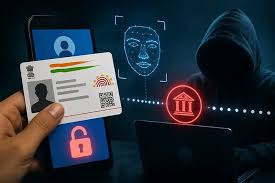
Imagine receiving a phone call from someone who sounds exactly like a family member.
The caller says:
“I have an emergency. I need money immediately.”
Your first reaction may be to help.
But what if the voice has been artificially generated?
Voice cloning technology can make impersonation more convincing.
CERT-In has specifically advised users to verify the authenticity of voice calls and urgent financial requests because AI-generated impersonation can be highly convincing.
How to protect yourself
If someone calls asking for money urgently:
- Don’t panic.
- Don’t immediately transfer money.
- Hang up if necessary.
- Call the person back using a number you already trust.
- Ask a personal question that a genuine person would reasonably know.
- Confirm the situation through another communication channel.
The key principle is simple:
Don’t trust a voice alone when money is involved.
2. Deepfake Video Scams

AI can also be used to manipulate images and videos.
A scammer may attempt to create a video that appears to show a real person saying something they never said.
This can be particularly dangerous when the impersonated person appears to be:
- a company executive
- a government official
- a celebrity
- a financial expert
- a family member
- or another trusted individual
CERT-In has previously classified deepfakes as a high-risk threat because manipulated audio, video and images can be used for fraud, misinformation and social engineering.
Why Deepfakes Are Difficult to Trust
People naturally trust what they can see and hear.
But seeing a person on video doesn’t automatically prove that the video is genuine.
This is why important financial or legal claims should be independently verified instead of being accepted simply because they appear in a video.
3. AI-Generated Phishing Messages

Phishing is not new.
The basic idea is simple:
A criminal pretends to be a trusted person or organisation to convince you to reveal information or perform an action.
That action might involve:
- clicking a link
- entering a password
- sharing an OTP
- downloading an application
- transferring money
- or providing personal information
AI can help criminals create more convincing messages.
A fake message might appear to come from a bank, delivery company, employer or government service.
The language can look professional enough that the victim doesn’t immediately suspect anything.
4. Fake Customer Support
Another growing problem is fake customer support.
Imagine that you have an issue with an online service.
You search for customer support and find a phone number on a website, social-media post or search result.
You call the number.
The person claims to be a support representative and asks you to install an application or share sensitive information.
The problem?
You may not actually be talking to the company.
A Safer Approach
Whenever you need customer support, start from the company’s official website or official application.
Don’t automatically trust phone numbers found in random posts, comments or messages.
This small habit can prevent many scams.
5. AI Investment Scams
Investment scams are particularly dangerous because they often promise something people already want:
easy money.
A scammer may create:
- fake financial experts
- fake investment websites
- fabricated testimonials
- fake trading dashboards
- AI-generated videos
- or convincing WhatsApp/Telegram groups
The victim may initially be shown small profits on a fake platform.
After gaining confidence, the scammer asks for a larger amount.
Eventually, the money disappears or the victim is asked to pay additional fees.
A Simple Rule
If someone guarantees unusually high returns with little or no risk, treat the offer with extreme suspicion.
Do your own verification before transferring money.
Never make a major financial decision simply because a video, influencer or online “expert” appears convincing.
6. AI-Powered Job Scams
Job seekers can also become targets.
A fraudulent recruiter might send:
- a convincing job description
- a fake interview invitation
- an employment contract
- a fake company website
- or professional-looking emails
The victim may eventually be asked to pay a registration fee, training fee, security deposit or equipment charge.
AI can make these documents and messages look more professional.
Before Accepting an Online Job
Check:
- the company’s official website
- the recruiter’s email domain
- the company’s verified LinkedIn presence
- the job listing on the company’s official careers page
- whether the interview process makes sense
- whether anyone is asking you to pay money
A legitimate recruitment process should be independently verifiable.
7. Fake Websites Are Getting More Convincing
A website does not have to look suspicious anymore.
A fraudulent site can copy:
- logos
- colours
- layouts
- language
- payment pages
- customer-support information
The website may even use a domain name that looks similar to the legitimate company.
That’s why users should check the actual domain name before entering passwords, card details or other sensitive information.
Don’t rely only on the logo or appearance of the website.
The Biggest Weakness Is Often the Human Being
Cybersecurity is not only a technology problem.
It is also a decision-making problem.
CERT-In’s guidance emphasises basic cyber hygiene, including keeping software updated, using strong unique passwords, enabling multi-factor authentication and being cautious with unsolicited messages and attachments.
A technically sophisticated security system can still fail if a user voluntarily gives a scammer access.
That’s why attackers often focus on psychology.
They create:
Urgency + Fear + Authority + Confusion
For example:
“Your bank account will be blocked today.”
Or:
“Your parcel cannot be delivered unless you pay immediately.”
Or:
“Your relative has been arrested. Send money now.”
The goal is to make the victim react before thinking.
How to Recognise an AI Scam
There isn’t one perfect sign.
Instead, look for a combination of warning signals.
Warning Sign 1: Extreme Urgency
Someone insists that you must act immediately.
Warning Sign 2: Unexpected Financial Request
A person suddenly asks for money, OTPs, passwords or payment authorisation.
Warning Sign 3: Suspicious Link
The message directs you to an unfamiliar website.
Warning Sign 4: Unusual Communication
A family member suddenly communicates in an unusual way or asks for something completely out of character.
Warning Sign 5: Too-Good-to-Be-True Offer
Someone promises guaranteed profits, free prizes or unusually high returns.
Warning Sign 6: Pressure to Keep It Secret
A scammer may tell you not to contact anyone else.
That should increase suspicion.
What You Should Never Share
Never casually share:
- UPI PIN
- ATM PIN
- internet-banking password
- OTP
- card CVV
- complete card details
- account passwords
- recovery codes
- sensitive identity documents
If someone asks for this information unexpectedly, stop the conversation and verify the request independently.
What to Do If You Have Already Lost Money
Don’t wait.
If you are in India and you believe you have become a victim of financial cyber fraud, report it as quickly as possible.
The Government’s Indian Cyber Crime Coordination Centre (I4C) operates the National Cyber Crime Reporting Portal, and the financial cyber-fraud helpline is 1930.
Immediate steps
- Contact your bank or payment provider.
- Report the transaction immediately.
- Call 1930 for financial cyber fraud.
- File a complaint through the official National Cyber Crime Reporting Portal.
- Preserve screenshots, transaction IDs, phone numbers, email addresses and messages.
- Change compromised passwords.
- Enable multi-factor authentication where available.
Speed matters because early reporting can help authorities and financial institutions respond to fraudulent transactions.
The Ministry of Home Affairs has reported that the CFCFRMS system under I4C had helped save more than ₹8,189 crore across more than 23.61 lakh complaints up to December 31, 2025.
How AI Can Also Help Fight Scams
There is an interesting contradiction here.
The same technology that can help criminals can also help defenders.
AI can potentially assist with:
- detecting suspicious transactions
- identifying unusual behaviour
- analysing large volumes of fraud reports
- detecting malicious patterns
- identifying suspicious accounts
- improving threat intelligence
India’s Ministry of Home Affairs has also highlighted work involving AI-driven detection of mule accounts and cyber financial fraud.
So the future of cybersecurity may not be humans versus AI.
It may be:
AI-powered criminals versus AI-assisted defenders — with humans making the final decisions.
The Future of Online Scams in India
AI-powered fraud is likely to become more sophisticated.
CERT-In’s 2026 advisory warns that advanced AI systems could increase the speed and scale of reconnaissance, vulnerability exploitation, phishing and social engineering attacks.
That means the old assumption that a scam will always look obviously fake is becoming dangerous.
A scam message may be perfectly written.
A fake website may look professional.
A voice may sound familiar.
A video may appear authentic.
The technology is improving.
Our verification habits need to improve too.
A Simple Rule for Staying Safe
Whenever an online request involves money, passwords, OTPs or urgent action, slow down.
Don’t let the other person control the pace of your decision.
Verify independently.
Call the person back.
Open the company’s official website yourself.
Check the domain.
Contact your bank through its official channel.
And if something feels unusually urgent or emotionally manipulative, treat that as a warning rather than a reason to act faster.
Final Thoughts
Artificial intelligence is not inherently good or bad.
It is a powerful technology that can be used for productive purposes as well as criminal activity.
The biggest change may be that scams are becoming harder to recognise based purely on appearance.
In the past, a poorly written message might immediately look suspicious.
In the AI era, a scam can potentially sound professional, look realistic and appear highly personalised.
That means digital safety increasingly depends on one simple habit:
Verify before you trust.
If someone asks for money, verify.
If someone sends an unexpected link, verify.
If a familiar voice asks for an urgent payment, verify.
If a video makes a shocking claim, verify.
Technology may become smarter, but careful human judgement remains one of the strongest defences against online fraud.
Frequently Asked Questions
What is an AI scam?
An AI scam is a fraudulent activity in which artificial intelligence is used to create, personalise or improve deceptive messages, voices, videos, websites or social-engineering attacks.
Can AI clone someone’s voice?
AI-based voice-cloning technology can generate highly convincing synthetic speech. Because of this, an unexpected urgent request for money should be independently verified even if the caller sounds like someone you know.
How can I identify an AI-generated scam?
Look for urgency, unexpected financial requests, suspicious links, requests for sensitive information, unusual behaviour and offers that appear too good to be true. Don’t depend on grammar or spelling alone as a warning sign.
What should I do if I lose money to an online scam in India?
Contact your bank or payment provider immediately and report financial cyber fraud through 1930. You can also use the Government of India’s National Cyber Crime Reporting Portal at cybercrime.gov.in.
Is AI itself dangerous?
AI is a technology and can be used for both beneficial and harmful purposes. The risk comes from how people and organisations use it. AI can assist criminals, but it can also help banks, governments and cybersecurity teams detect fraud.
Sources and Further Reading
- CERT-In — Defending Against Frontier AI Driven Cyber Risks
- CERT-In — Deepfakes: Threats and Countermeasures
- Ministry of Home Affairs — Indian Cyber Crime Coordination Centre
- National Cyber Crime Reporting Portal
- CERT-In — Blueprint for Reducing Exposure to AI-Assisted Vulnerabilities
Editorial note: This article is intended for cybersecurity awareness and does not replace advice from your bank, law-enforcement agency or cybersecurity professional.
Tags: AI scam in India, AI scam in India 2026, AI scam in India all time, AI scam in India, 2025, AI scam in India, AI scam in India, AI scam in India