
How UPI changed India: A decade ago, paying for a cup of tea, splitting a restaurant bill or sending ₹100 to a friend usually meant using cash or a bank transfer. Today, millions of Indians can complete the same transaction by scanning a QR code or entering a UPI ID within seconds.
The Unified Payments Interface, better known as UPI, has changed more than the way Indians make payments. It has influenced how small businesses accept money, how people split expenses and how customers think about cash itself.
According to the latest statistics published by the National Payments Corporation of India (NPCI), UPI processed more than 24.5 billion transactions in August 2026, with a transaction value of about ₹29.82 lakh crore.
So how did a payment system become such an ordinary part of everyday Indian life?
What Is UPI?
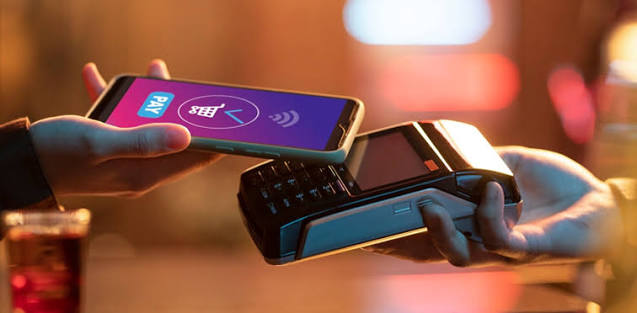
UPI is an instant payment system developed by NPCI that allows money to be transferred between bank accounts using a supported payment application.
Instead of requiring someone to remember detailed bank information for every transaction, UPI can allow payments through methods such as a UPI ID, mobile number or QR code, depending on the service being used.
NPCI describes UPI as an instant payment system that enables transfers between bank accounts.
This simplicity is one of the biggest reasons behind its adoption.
Before UPI, Digital Payments Felt More Complicated
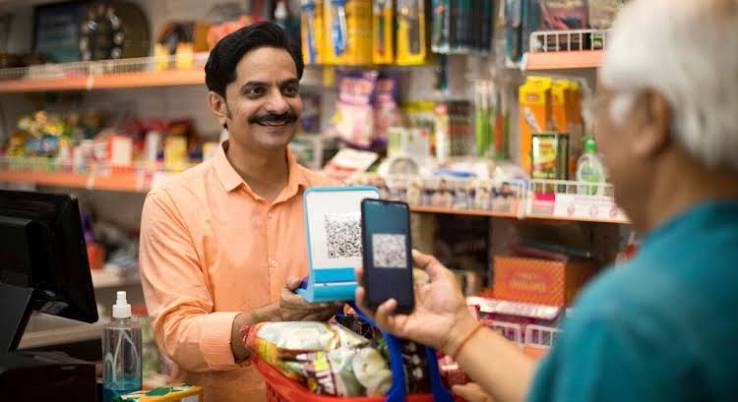
Digital payments existed before UPI became popular.
People could use:
- Internet banking
- Debit cards
- Credit cards
- NEFT
- IMPS
- Mobile wallets
But these methods did not always provide the same combination of simplicity, interoperability and QR-based convenience that consumers experience with UPI today.
For a small shopkeeper, accepting a digital payment through a QR code can be much simpler than setting up a traditional card-payment infrastructure.
For a customer, scanning a QR code can be easier than carrying cash.
That difference in convenience matters when millions of small transactions happen every day.
The QR Code Changed the Street-Side Payment
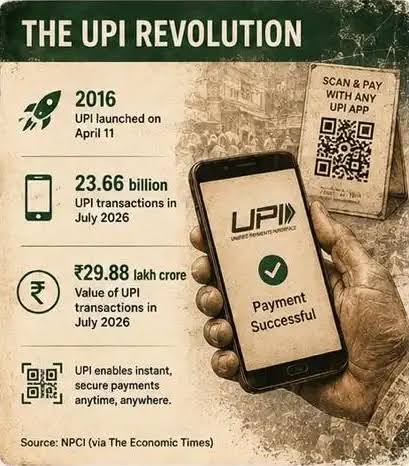
One of the most visible changes brought by UPI is the QR code.
Walk into a small grocery shop, roadside food stall, local clothing store or neighbourhood service business and there is a good chance you will see a QR code available for payment.
This changed an important assumption about digital payments.
Digital payment no longer had to mean a large store with a card machine.
A small merchant could participate too.
That helped bring digital payments into everyday transactions that previously depended heavily on cash.
UPI Made Small Payments Feel Normal
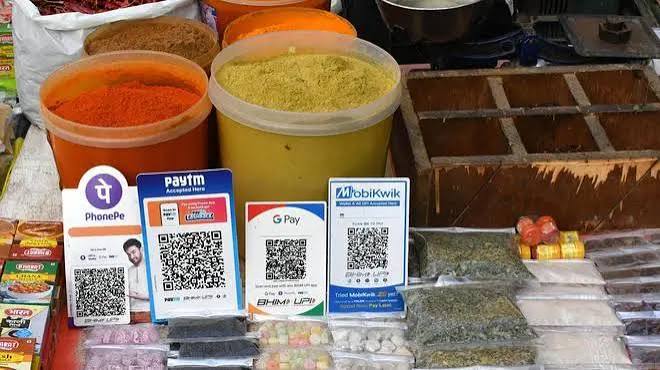
Consider a ₹30 payment.
Earlier, a person might not have thought twice about using a ₹20 or ₹50 note.
With UPI, the same payment can be completed digitally.
The amount doesn’t need to be large.
This is important because the real transformation of a payment system isn’t necessarily visible in one expensive transaction.
It happens when millions of tiny transactions move through the system every day.
The latest NPCI data illustrates the scale: UPI recorded 22.35 billion transactions in April 2026, rising to 24.51 billion in August 2026.
Splitting Bills Became Easier
Another everyday change is how people divide expenses.
Imagine four friends go to a restaurant and the bill is ₹2,000.
Instead of collecting cash from everyone, one person can pay the entire amount and the others can send their shares digitally.
The same idea works for:
- Rent sharing
- Travel expenses
- Food orders
- Movie tickets
- Gifts
- Group purchases
- Household expenses
This may look like a small convenience, but repeated small conveniences can significantly change behaviour.
UPI Also Changed Small Businesses
UPI isn’t only a consumer story.
It has changed the way many small businesses interact with customers.
A merchant can accept digital payments without necessarily needing the same setup associated with traditional card payments.
For businesses operating with small transaction values, this can be particularly useful.
Digital records can also make it easier for a merchant to keep track of incoming payments compared with relying entirely on physical cash.
However, merchants still need to understand transaction records, settlement arrangements and the terms of the payment service they use.
India’s Digital Payment Ecosystem Is Still Evolving
UPI itself has not stopped evolving.
NPCI continues to introduce new features and payment-related capabilities.
For example, NPCI has introduced Hello! UPI, which supports conversational payment experiences using regional Indian languages. The initiative is designed to make UPI easier to navigate for people who may find conventional smartphone interfaces difficult.
NPCI has also announced initiatives involving biometric authentication and other changes intended to make digital payments more convenient and secure.
This is important because India’s next phase of digital payments will not necessarily be about simply making existing users pay faster.
It will also be about making digital payments accessible to people who may have different levels of digital literacy.
UPI Is Moving Beyond India Too
Another interesting development is UPI’s expansion into international use cases.
NPCI provides UPI Global services that can allow eligible users to make QR-based payments at participating international merchants using supported UPI applications. Availability depends on the country, bank and payment application.
This means UPI is increasingly becoming more than a domestic payment story.
Its international acceptance also gives Indian travellers another potential way to pay abroad without depending entirely on cash or traditional cards.
But Convenience Comes With Responsibility
The biggest advantage of UPI is also something users need to be careful about.
A payment can be extremely easy to initiate.
That means users should slow down when something looks suspicious.
Before authorising a payment, check:
- The recipient’s name
- The amount
- The purpose of the payment
- Whether you actually initiated the transaction
- Whether a payment request is genuine
Most importantly, never share your UPI PIN with another person.
NPCI specifically advises users not to share their UPI PIN and explains that the PIN is used to authorise transactions.
UPI Scams Can Exploit Human Mistakes
Many digital-payment fraud attempts don’t depend on breaking the payment system itself.
Instead, criminals may try to manipulate users.
For example, someone might claim that they are sending money but ask the victim to enter a UPI PIN.
That should immediately raise suspicion.
A simple rule is worth remembering:
Receiving money does not normally require you to enter your UPI PIN.
The PIN is used to authorise a payment from your account.
Users should also avoid clicking unknown payment links or installing applications at the request of strangers.
Has UPI Reduced the Importance of Cash?
Cash hasn’t disappeared.
There are still situations where people prefer or require cash.
But the role of cash has changed.
For many consumers, carrying a large amount of physical money is no longer necessary for everyday purchases.
A smartphone can now handle transactions ranging from a small roadside purchase to a much larger merchant payment.
That doesn’t mean cash is obsolete.
It means India now operates with a much stronger combination of cash and digital payment options.
The Bigger Change: Digital Payments Became Invisible
Perhaps the most interesting effect of UPI is that people often don’t think about the payment infrastructure anymore.
You scan a QR code.
You confirm the amount.
The payment is completed.
There is no need to think about the banking network operating in the background.
That is often the sign of successful technology.
The technology becomes complicated behind the scenes but simple for the person using it.
What Could UPI Look Like in the Future?
The next stage of digital payments could involve more than smartphones and QR codes.
NPCI has already announced work involving AI, connected devices and new payment experiences.
In February 2026, NPCI announced a collaboration with NVIDIA aimed at advancing sovereign AI capabilities for India’s digital payments ecosystem, including areas such as grievance redressal and payment-system security.
NPCI also announced initiatives involving IoT payments, AI-powered UPI assistance and other payment infrastructure developments in 2025.
This suggests that the future of digital payments may involve technology becoming even less visible.
Instead of thinking about “making a payment”, people may increasingly interact with services where payment is simply built into the experience.
Final Thoughts
UPI didn’t become successful simply because it was another digital payment option.
Its bigger strength was convenience.
It made digital payments practical for everyday situations where cash had traditionally dominated.
A ₹20 snack, a ₹500 restaurant bill, a shared travel expense and a business payment can all exist within the same payment ecosystem.
The numbers show just how large this transformation has become. In August 2026 alone, UPI processed more than 24.5 billion transactions, according to NPCI’s official statistics.
But the next challenge is not simply making payments faster.
It is making them safer, more inclusive and easier to understand.
For users, that means enjoying the convenience while remembering the basics of digital security: verify the recipient, check the amount and never reveal your UPI PIN.
The biggest achievement of UPI may ultimately be that digital payments stopped feeling like a special technology.
For millions of Indians, they simply became part of everyday life.
Frequently Asked Questions
What is UPI?
UPI, or Unified Payments Interface, is an instant payment system developed by NPCI that enables bank-account-to-bank-account payments through supported applications.
Why is UPI so popular in India?
UPI combines quick bank transfers with convenient payment methods such as QR codes and UPI IDs. This makes it useful for both consumers and merchants, including many small businesses.
Is UPI safe to use?
UPI has security mechanisms, but users still need to protect themselves from scams. Always verify payment details and never share your UPI PIN, OTP or other sensitive authentication information with strangers.
Can UPI be used outside India?
UPI Global supports international merchant payments in selected locations and depends on participating countries, banks and payment applications. Users should check the current availability before travelling.
How many UPI transactions happen in India?
According to NPCI’s official statistics, UPI processed about 24.51 billion transactions in August 2026, worth approximately ₹29.82 lakh crore.
Sources and Further Reading
- NPCI — UPI Product Statistics
- NPCI — UPI Overview and Safety Information
- NPCI — UPI Global Acceptance
- NPCI — Hello! UPI
- NPCI — AI Infrastructure Initiative with NVIDIA
Tags: how UPI changed India, how UPI changed India, how UPI changed India, how UPI changed India, how UPI changed India
Visit for more information: Crazyinfo24